

Tooth loss is always a challenge that changes your routine. Sometimes it happens suddenly due to an injury, and sometimes, on a dentist’s advice, when it is no longer possible to save a tooth. You can’t get your lost tooth back, but modern dentistry offers reliable solutions. To enjoy your favorite food again and smile without embarrassment, various prosthetic techniques are used. The most popular options are dental bridges and partial prostheses. Comparing partial denture vs bridge helps you understand which method works best in a particular situation
What Is a Dental Bridge?
The dental bridge is a way to fill in gaps in a smile when one or more teeth are missing. His task is not only to restore aesthetics but also to restore proper digestion and maintain the health of all the cavities of the mouth. The bridge’s design includes artificial teeth that cover an empty space and special crowns attached to nearby living teeth. This creates a strong and natural foundation, allowing you to feel confident and comfortable again.

What Is a Partial Denture?
Partial dental structures serve as a removable replacement for lost teeth and adjacent tissues. For reliable fixation, they may have a plastic or metal base painted pink or natural to the gums. Such prostheses are used when one or more teeth are missing from the jaw.
In contrast to fully removable variants, bridge-type designs are fixed to adjacent teeth via crowns. They create a sense of natural teeth and help to keep the remaining teeth stable, preventing them from being displaced.
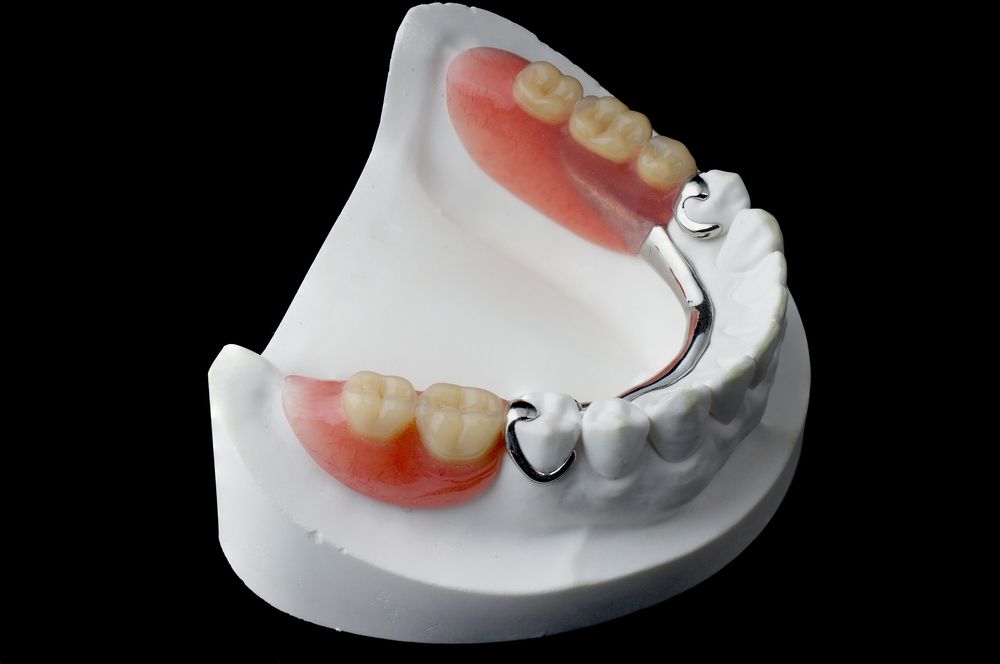
Dental Bridge vs Partial Denture: Core Differences
There are quite a lot of differences between bridge vs partial, so it’s worth studying everything before making a decision. This will ultimately allow you to enjoy the result as much as possible.
Stability and comfort
The main differences between a dental bridge vs partial denture are in their functional properties and ease of use. List some:
- Stability of the bite. The bridges are firmly fixed and ensure proper chewing, while prostheses can be displaced during eating.
- Overall oral stability. Bridges maintain jaw shape and function; prostheses are less stable.
- Commuting. Prostheses can often be removed when convenient for the person to care for, while bridges are a permanent structure as close as possible to natural teeth.
- Durability. Bridges last longer, and prosthetics are susceptible to wear and need regular adjustments.
The choice between a prosthesis and a bridge depends on the patient’s personal preferences and the dentist’s advice. Some appreciate the ability to remove a prosthesis, while others prefer a more durable solution, such as a bridge.
Impact on surrounding teeth
Dental bridges and partial dentures both serve to restore missing teeth, but their installation principle is different. The bridge is a whole structure that is fixed on adjacent teeth or implants and remains in place permanently. The partial prosthesis, on the other hand, is detachable. It is held in place by reference to neighboring teeth and adjacent gums, allowing it to be removed if necessary.
Pros and Cons of Dental Bridges
To choose between partial vs bridge, it is necessary to consider their main features. Dental bridges are often seen as a convenient way to recover lost teeth, and they do have strengths. They help restore the natural appearance of a smile, restore the ability to eat and speak without difficulty, and prevent the movement of nearby teeth into the space left by the missing tooth. All of this makes bridges a popular solution for partial tooth loss.
However, there is also a downside to such a structure. If the support teeth are weakened or damaged by caries, the bridge may become unstable. When these teeth are not strong enough, there is a risk they will break. Insufficient care for the prosthesis and the gum around it can lead to a buildup of grease, causing inflammation or new problems with tooth decay.
Pros and Cons of Partial Dentures
Partial dentures are often a more cost-effective option for replacing missing teeth than bridges or crowns on implants. In addition, they have a number of additional advantages:
- Comfort in use. The prosthesis is fixed to the remaining teeth with a closure, so it does not shift during chewing or speaking. This is especially important for the lower jaw, where full prostheses can “float” and cause discomfort.
- Minimal interference. Partial dentures do not require surgery and no significant treatment of the adjacent teeth, making them suitable for patients with limited dental care.
- Aesthetics. The denture’s teeth look natural, which helps maintain a smile, although some patients need time to get used to the design.
Consider the limitations. Over time, changes in the oral cavity can affect the placement of a prosthesis, and the functional qualities of a partial prosthesis are inferior to bridges and implants.
Which Option Lasts Longer?
The production and fitting of a partial denture usually takes less time than visits to the dentist, especially for a simple acrylic dental slipper. The bridge structure requires more complex preparation. That is, the treatment of neighboring teeth, the removal of precise sheeting, and subsequent installation with cement fixation.
Cost, Maintenance, and Daily Care Comparison
To understand that dental bridge vs partial denture is more suitable for you, you need to figure out how to care for them. See the table below.
| Criterion | Dental Bridge | Partial Denture |
| Cost | Usually more expensive at the start, as it requires preparation of support teeth and installation of crowns. | More affordable option, especially when replacing several teeth at once. |
| Care and maintenance | Requires thorough hygiene around the bridge and regular visits to the dentist to check the condition of the support teeth. | Requires daily cleaning and storage in a special solution; the prosthesis can be removed for maintenance. |
| Daily use | A fixed structure feels like your own teeth, not removed; convenient when chewing and talking. | The partial denture may require some habituation; it can sometimes cause a slight discomfort when worn for a long time. |
When a Dentist May Recommend One Over the Other
The dentist can offer a bridge if you need a permanent option and the adjacent teeth are strong. The prosthesis is suitable when it is important to avoid a denture or when a removable option is preferred. The choice depends on the condition of your teeth, your budget, and desired comfort. Sometimes the decision is made with the patient after examination and analysis of the bite.
FAQ
What is the best dental solution?
There is no universal solution, because each situation is unique. Choose a certified dentist and discuss the best options with them.
What is more convenient to chew and easier to adapt to?
The bridge is fixed and behaves like a real tooth, with the partial prosthesis sometimes displaced, especially in the lower jaw, during rough eating.
Is it possible to use a bridge if the neighboring teeth are weak?
No, the bridge requires strong support. In such cases, a partial prosthesis is safer and does not injure neighboring teeth.
What is suitable for temporary use?
A partial prosthesis is a good temporary option. The bridge has been out of service for a long time and will remain so for a couple of weeks.
Can I sleep with a prosthesis?
It is better to remove the partial prosthesis overnight to give your gums a break. The bridge is always in place, so sleep safely with it.